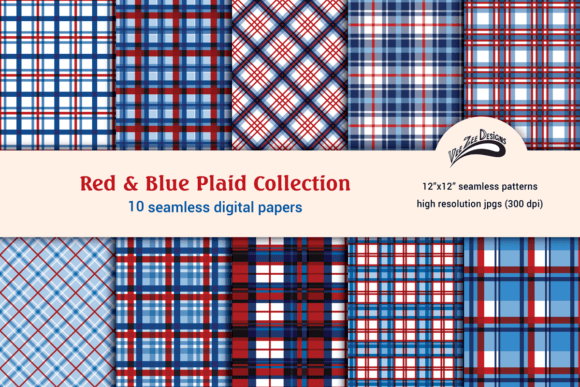
Red and Blue Plaid Digital Paper Pattern: A Versatile Tool for Creative Projects
The Red and Blue Plaid Digital Paper Pattern is a high-quality, seamless design that blends the timeless appeal of plaid with the convenience of digital assets. Ideal for a wide range of creative applications, this pattern offers a bold yet balanced aesthetic that can elevate everything from scrapbooking layouts to fabric prints. Whether you're an experienced designer or just starting out, these digital papers serve as a reliable foundation in your workflow, adding visual interest and professionalism to your work.
Understanding the Pattern's Role in Creative Workflows
In any creative process, consistency and visual harmony are key elements. The Red and Blue Plaid Digital Paper Pattern helps maintain both by providing a structured background that complements other design elements without overwhelming them. Its classic color combination makes it particularly useful for projects requiring a traditional or seasonal feel, such as holiday cards, winter-themed marketing materials, or heritage-inspired branding.
Before beginning a project, many designers use digital paper patterns like this one to set the tone and mood. By choosing a red and blue plaid, they signal warmth, energy, and reliability—colors often associated with trust and passion. This decision influences the rest of the design choices, ensuring that all components align visually and thematically.
Preparation and Integration into Design Projects
When preparing for a project, having a library of ready-to-use digital assets saves time and streamlines the planning phase. The Red and Blue Plaid Digital Paper Pattern fits perfectly into this preparation stage. You can store it alongside other textures, backgrounds, and templates in a well-organized folder structure, making it easy to access when needed.
- Scrapbooking: Use the pattern as a base for photo albums or memory journals. Layer it under text or images to add depth and contrast.
- Sublimation Printing: Apply the pattern to mugs, tumblers, or apparel using sublimation techniques. Its seamless nature ensures no visible edges after printing.
- Invitations and Cards: Incorporate the pattern into event invitations, thank-you cards, or announcements for a cohesive look.
- Wallpaper and Fabric Designs: Repurpose the pattern for digital wallpaper or fabric mockups, offering clients or customers a realistic preview before production.
By integrating these papers early in your workflow, you can establish a consistent visual language across multiple deliverables. For example, if you're designing a series of social media posts for a client’s winter campaign, using the same plaid pattern across each asset will reinforce brand recognition and create a unified experience.
Compatibility and Usability Across Platforms
These digital papers come in JPG format, which is widely supported across most design software and platforms. Their resolution of 300 dpi and size of 3600 x 3600 pixels ensure clarity and scalability, whether you're printing physical items or creating digital content for screens. Because the files are included in a single zip folder, managing and deploying them is straightforward, especially when working on tight deadlines or multi-tasking between several projects.
Designers who use Adobe Photoshop, Illustrator, or Canva will find the Red and Blue Plaid Digital Paper Pattern easy to import and manipulate. It works well as a layer beneath other graphics, or as a standalone element when simplicity is the goal. Additionally, its seamless construction means it can be tiled without interruption, making it ideal for large-scale designs like banners or posters.
Workflow Examples and Practical Implementation
Consider a scenario where a small business owner wants to launch a new line of personalized winter accessories. They might begin by downloading the Red and Blue Plaid Digital Paper Pattern Bundle Pack to their computer. Next, they could open the pattern in their preferred design tool and use it as a base for custom tumbler wraps or tote bag prints. Since the pattern is already optimized for print and digital use, there’s minimal need for additional adjustments—saving hours of prep work.
- Open the digital paper in your design software.
- Adjust the opacity or blend mode to integrate it with other layers.
- Add text, logos, or illustrations on top of the pattern.
- Export the final design in the required format for printing or online publishing.
For educators or bloggers looking to enhance their printed materials or website headers, the pattern can act as a subtle yet effective background. When combined with white or cream-colored fonts, it provides excellent readability while still drawing attention with its vibrant colors. In this context, the pattern serves as a bridge between aesthetics and functionality.
Efficiency and Long-Term Use
One of the biggest advantages of using digital paper patterns is their reusability. Once downloaded, the Red and Blue Plaid Digital Paper Pattern can be used repeatedly across different projects. For instance, a wedding planner might apply the same pattern to save-the-date cards, seating charts, and thank-you notes, ensuring a consistent theme throughout the event materials.
To maximize efficiency, consider organizing your digital assets in folders categorized by project type or season. This approach not only keeps your workspace clean but also allows you to quickly locate the right pattern when inspiration strikes. If you frequently work with similar themes, having this pattern saved in your go-to collection can significantly speed up your design process.
Quality Control and Consistency
Maintaining quality control is essential when working with digital assets, especially when producing items for sale or professional use. The Red and Blue Plaid Digital Paper Pattern is designed with precision, ensuring sharp lines and accurate color reproduction. Before finalizing a project, always test the pattern in a low-volume sample run—print a small swatch or share a digital preview—to confirm how it looks in context.
Consistency is another factor to consider. If you're working on a series of related designs—such as product packaging or promotional materials—it’s important to apply the pattern uniformly. This includes using the same scale, alignment, and positioning across all assets. Such attention to detail builds a stronger visual identity and enhances user experience.
Organizing Your Digital Assets for Smooth Implementation
With ten unique seamless digital papers in the bundle, variety is built in. However, to avoid confusion during implementation, it's wise to rename each file with clear, descriptive names (e.g., “Plaid-RedBlue-WinterTheme” or “Plaid-Background-ChristmasCards”). This simple step can prevent errors and streamline collaboration with team members or clients who may need to reference specific designs.
You can also create layered PSD files that include the pattern as a background layer. These templates can then be duplicated and customized for different uses. For example, a template with the plaid pattern as a base might be used to generate multiple variations of a greeting card by simply changing the text and images.
Real-World Applications and Use Cases
Marketers often rely on strong visual elements to capture attention. The Red and Blue Plaid Digital Paper Pattern can be used to create eye-catching flyers, brochures, or even email headers for campaigns. Its boldness stands out against minimalist layouts, guiding the viewer’s focus to key messages.
Freelancers and entrepreneurs benefit from having versatile assets like this pattern in their toolkit. It allows them to offer clients more options without increasing production costs. For instance, a stationery designer might use the pattern as part of a themed collection, giving clients a choice between modern, rustic, or traditional styles based on how the pattern is applied.
Additionally, the pattern can be used in educational materials. Teachers or trainers can incorporate it into worksheets, handouts, or presentation slides to make content more engaging. Its structured appearance can help organize information visually, making it easier for learners to follow along.
Combining with Other Tools and Resources
Digital paper patterns work best when paired with complementary tools. For instance, using the Red and Blue Plaid Digital Paper Pattern with a vector-based logo or icon can result in a clean, professional layout. Similarly, combining the pattern with typography tools like Google Fonts or Adobe Typekit allows for greater customization and flexibility.
If you're using the pattern for fabric designs, you may want to pair it with mockup generators like Placeit.net or Mockups5.com. These platforms allow you to visualize how the pattern would look on real-world products, helping you make informed decisions before moving into production.
For those using the pattern in sublimation workflows, compatibility with heat press machines and sublimation inks should be verified. Always check the recommended settings for your equipment to ensure the best results. The pattern’s high resolution and vivid colors make it well-suited for sublimation, but proper calibration is necessary for accurate output.
Practical Tips for Getting Started
If you’re new to using digital paper patterns, here are some tips to help you get started:
- Download and unzip the bundle pack to your local drive for quick access.
- Use a naming convention to identify each pattern clearly, especially if you plan to use multiple variations.
- Test the pattern at different scales and resolutions to see how it performs in various contexts.
- Keep backups of your original files in case you need to revisit or edit them later.
Once you’ve familiarized yourself with the pattern, start experimenting. Try overlaying it with transparent shapes or gradients to soften its impact, or let it shine as a dominant feature in minimalist designs. Each application tells a different story, and the Red and Blue Plaid Digital Paper Pattern gives you the flexibility to explore those stories creatively.
Ensuring Longevity and Relevance
While trends in design evolve over time, plaid remains a staple in many industries due to its nostalgic and decorative qualities. The Red and Blue Plaid Digital Paper Pattern is a timeless asset that can be reused across seasons and campaigns. As such, it's worth investing in a high-quality version like the one offered in the Bundle Pack.
As you continue to build your portfolio or product line, keep track of how and where you've used the pattern. This not only helps with future organization but also allows you to refine your style over time. Consider creating a mood board or digital catalog of your favorite combinations involving the plaid pattern so you can reference them easily in upcoming projects.
Conclusion
The Red and Blue Plaid Digital Paper Pattern is more than just a decorative element; it's a strategic component in the broader creative process. From initial concept to final delivery, it supports consistency, enhances visual storytelling, and integrates smoothly with other tools and methods. Whether you're working on a personal hobby project or a professional assignment, this pattern offers value at every stage.
By understanding its role in your workflow and applying it thoughtfully, you can unlock new levels of creativity and efficiency. With ten seamless papers in a single, convenient download, the Red and Blue Plaid Digital Paper Pattern Bundle Pack is a resource worth adding to your digital toolbox for long-term use.