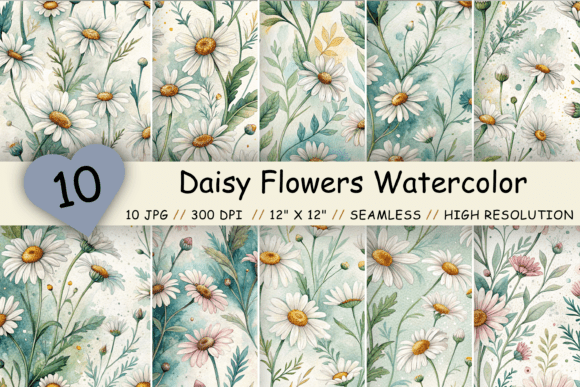
Daisy Flower Watercolor Seamless Pattern: A Versatile Design Asset for Creative Workflows
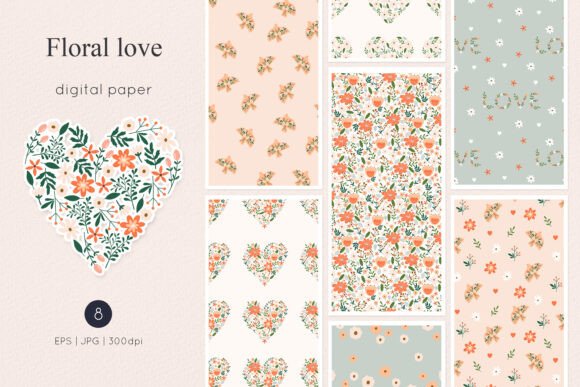
The Daisy Flower Watercolor Seamless Pattern is a high-quality digital design resource that seamlessly integrates into various creative workflows. This pattern features delicate daisies rendered in soft watercolor tones, creating an elegant and timeless aesthetic. As part of the Floral Digital Craft Paper Bundle, it offers 10 unique flower-themed digital paper backgrounds, all delivered in a single zipped file. Each image is formatted as a JPG at 300 dpi with dimensions of 12 x 12 inches (3600 x 3600 pixels), making it ideal for both digital and print applications.
What Makes It Unique: Understanding Seamless Patterns
A seamless pattern, also known as a repeating pattern, is designed to tile without visible seams or disruptions. This characteristic allows it to be used effectively across large surfaces, from wrapping paper to fabric designs. The Daisy Flower Watercolor Seamless Pattern leverages this property to provide a cohesive visual element that can be scaled up or applied repeatedly without compromising its appearance.
Created using artificial intelligence, these patterns maintain a consistent style while offering subtle variations in each design. This ensures your projects remain visually appealing and avoid monotony when using repeated elements. For creators who value efficiency and quality, such AI-generated resources streamline the design process by delivering ready-to-use assets that align with professional standards.
Where It Fits Into Your Workflow
Seamless floral patterns like the Daisy Flower Watercolor Seamless Pattern are not just decorative—they serve functional roles in different stages of creative and business processes:
- Pre-Project Planning: Use these papers as background templates during brainstorming sessions or mood board creation. Their gentle aesthetic helps set a creative tone and can inspire ideas for color schemes, themes, or branding concepts.
- During Execution: Integrate them into graphic design software for invitations, packaging, or marketing materials. They work well as overlays or base textures to add depth and warmth to digital compositions.
- Post-Creation Enhancements: Apply the patterns as accents in final layouts, or use them to create mockups for client presentations. Their high resolution ensures they look sharp in printed outputs, such as cards or stationery.
Use Cases Across Industries and Hobbies
This floral digital craft paper bundle is especially useful in several scenarios:
1. Event Design and Invitations
Event planners often require custom invitations and décor that reflect a theme. The Daisy Flower Watercolor Seamless Pattern provides a fresh, spring-like feel perfect for birthdays, weddings, baby showers, or garden parties. You can apply it as a background in Canva, Adobe Illustrator, or Photoshop to build visually harmonious designs quickly.
2. Scrapbooking and Personal Projects
For hobbyists and educators, these patterns are invaluable for scrapbooking, art classes, or DIY crafts. Their soft watercolor look adds a vintage charm to photo albums, memory books, or handmade greeting cards. Since they’re available in multiple files, you can alternate between patterns to maintain variety within a project while preserving a cohesive style.
3. Branding and Marketing Materials
Entrepreneurs and marketers can leverage these patterns to enhance brand visuals. Whether designing social media assets, email newsletters, or product packaging, the Daisy Flower Watercolor Seamless Pattern brings a natural and inviting touch. Pair it with minimalist typography for a balanced look that appeals to eco-conscious or lifestyle-oriented audiences.
4. Educational and Publishing Resources
Educators and publishers may find these patterns useful for creating engaging worksheets, children’s books, or educational materials. The floral elements can help break up dense text and make content more approachable. Additionally, the high-resolution format supports printing for physical handouts or book covers.
How to Integrate Into Your Creative Process
Incorporating the Daisy Flower Watercolor Seamless Pattern into your workflow requires thoughtful planning. Here are some practical steps to ensure smooth implementation:
- Organize Your Files: Extract the zipped folder and store the JPGs in a dedicated project directory. Label them clearly based on their visual characteristics (e.g., “Daisies with Soft Blue Background” or “White Daisies on Green”) to save time when selecting the right one later.
- Test Compatibility: Before committing to a full design, test how the pattern interacts with your chosen tools. Open one of the files in your preferred graphic design software to check tiling behavior, layer blending options, and overall usability.
- Plan for Consistency: Decide which pattern(s) will be used throughout your project. If working on a multi-page document or product line, stick to a few selected designs to maintain visual continuity and professionalism.
- Adjust for Purpose: Depending on whether you're using the pattern digitally or for print, consider adjusting brightness, contrast, or saturation. These tweaks can help the pattern blend better with other design elements or match specific brand guidelines.
- Backup and Archive: Once finalized, keep a copy of the original files in a secure cloud storage system or external drive. This ensures you always have access to the highest quality versions for future revisions or reuse.
Workflow Examples and Practical Tips
Here are two real-world examples of how the Daisy Flower Watercolor Seamless Pattern can elevate your work:
Example 1: Birthday Invitation Design
As a freelance designer, you might receive a request to create a birthday invitation with a rustic, handcrafted feel. Start by opening the Daisy Flower pattern in your design software. Set it as the background layer and adjust the opacity slightly to let text stand out. Overlay bold, handwritten-style fonts and add relevant details like the event date and location. Finally, export the design at the correct print resolution and send it to the client or printer.
Example 2: Children's Book Illustration
When illustrating a picture book for young readers, these patterns can serve as page borders or background textures. Import one of the Daisy Flower designs into your illustration software, scale it appropriately, and position it behind character illustrations or story elements. The soft colors and organic shapes complement playful artwork and contribute to a calming reading experience.
Pro Tip: To prevent overuse, limit the application of seamless patterns to no more than 20–30% of the total visual area in any given layout. This maintains readability and avoids overwhelming the viewer with too much texture.
Factors to Consider When Using Seamless Floral Patterns
While the Daisy Flower Watercolor Seamless Pattern is a powerful asset, successful integration depends on a few key considerations:
Preparation and Organization
Before diving into a project, assess what kind of floral pattern best suits your needs. Are you looking for something subtle or bold? Will it be used in black and white or color? Answering these questions upfront saves time and ensures the pattern complements your overall vision.
Compatibility and File Handling
All 10 files are in JPG format, which means they’re compatible with most editing platforms. However, if you plan to modify the pattern significantly—such as changing colors or adding transparent layers—you may need to convert it to a PNG format first. Many online converters allow batch processing, so this can be done efficiently.
Usability and Application
These patterns are optimized for printing but can also be used in digital formats. Always confirm the intended output before applying the pattern. For web-based projects, compressing the images slightly can improve loading times without sacrificing quality. Tools like TinyPNG offer quick compression without noticeable loss.
Efficiency and Time-Saving Benefits
One of the main advantages of using pre-made seamless patterns is the reduction in design time. Instead of manually arranging flowers or painting them yourself, you can focus on other aspects of your project, such as layout, typography, or messaging. This makes the Daisy Flower Watercolor Seamless Pattern particularly valuable for professionals managing tight deadlines or large-scale projects.
Long-Term Use and Reusability
High-quality seamless patterns like those in the Daisy Flower collection are reusable across multiple projects. Store them in a centralized library where you can easily access them for future use. Organizing them by category (e.g., floral, seasonal, color palette) ensures you can retrieve the right pattern quickly when needed.
Moreover, since they are AI-generated, there’s less risk of copyright issues compared to traditional stock imagery. Always review the licensing agreement provided by the seller to confirm terms of use, especially for commercial purposes.
Quality Control and Visual Harmony
To ensure the pattern enhances rather than detracts from your project, perform a few simple checks:
- Ensure the pattern doesn’t clash with the primary colors of your design.
- Verify that it scales well without pixelation or distortion.
- Confirm that it works across different mediums (print vs. digital).
By maintaining consistency in how you apply the pattern, you’ll reinforce a strong visual identity across your work. This is especially important in branding and publishing, where cohesion plays a critical role in audience engagement and recognition.
Conclusion: Elevate Creativity with Careful Integration
The Daisy Flower Watercolor Seamless Pattern is more than just a pretty background—it’s a strategic tool for enhancing creativity, efficiency, and visual appeal. By understanding how it functions within broader workflows and considering factors like compatibility, organization, and long-term use, you can maximize its potential in both personal and professional contexts.
Whether you’re a small business owner preparing product labels, a blogger crafting printable guides, or a hobbyist experimenting with new techniques, these floral digital papers offer flexibility and beauty. Use them thoughtfully, and they’ll become a staple in your creative toolkit.
Stay updated with new design resources by following trusted sources or creators who regularly share premium digital assets. With the right tools and mindset, you can transform even the simplest projects into visually compelling experiences.